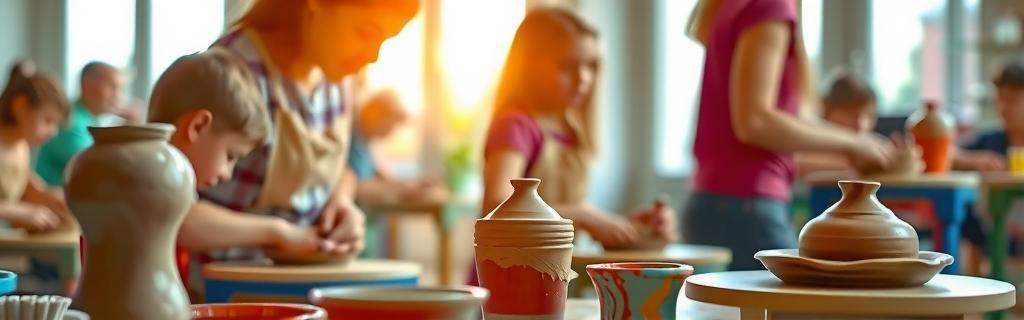
Homeschooling offers the amazing freedom to craft an education perfectly suited to your child’s passions and learning pace. Integrating hands-on arts like pottery can elevate this experience, transforming learning into a tangible, creative adventure. Pottery isn’t just about making pots; it’s a unique avenue for homeschoolers to develop crucial skills, express themselves, and connect learning across subjects like science, math, and history. Let’s dive into the world of homeschool pottery!
- Why Pottery is Fantastic for Homeschoolers
- Age Appropriateness & Safety Essentials
- Finding the Right Pottery Program for Your Homeschooler
- Setting Up a Simple Home Pottery Space
- Sample Homeschool Pottery Syllabus
- Conclusion: Shape Your Child’s Learning
Why Pottery is Fantastic for Homeschoolers
Pottery offers a wealth of benefits that align beautifully with the goals of homeschooling:
Educational Advantages
- Fine Motor Mastery: Squishing, rolling, pinching, and shaping clay is fantastic for developing dexterity, hand-eye coordination, and the small muscle control needed for writing and other tasks.
- Hands-On Science: Kids learn about the properties of different clays (earthenware, stoneware, porcelain), the science behind glazes (chemistry!), and the transformation that happens during kiln firing (heat, materials science). Understanding why different clays need different temperatures is a direct science lesson!
- Practical Math: Pottery involves measuring clay, calculating glaze recipes (requiring ratios and fractions), estimating volume, and understanding geometric shapes – math in action!
- History & Culture Connection: Explore pottery traditions from around the world! Studying ancient Greek amphoras, Native American coil pots, or Japanese Raku firing techniques brings history and social studies to life.
Developmental Growth
- Unleashing Creativity: Clay offers a blank canvas for imagination. Children can express ideas and emotions through form, texture, and color.
- Problem-Solving Power: What happens when a pot slumps or cracks? Pottery teaches kids to assess problems, adapt their approach, and find solutions.
- Patience & Persistence: Good pottery takes time and effort. It teaches the value of sticking with a process, even when it’s challenging.
- Sensory Exploration: The tactile nature of clay provides rich sensory input, which is crucial for development.
- Boosting Confidence: Successfully creating a finished piece, from a lump of clay to a glazed pot, is a major self-esteem booster!
- Mindfulness & Stress Relief: The focused, rhythmic process of working with clay can be incredibly calming and meditative.
- Social Skills (in group settings): Group classes encourage sharing tools, collaborating on ideas, and learning together.
Age Appropriateness & Safety Essentials
While even young children (5-6 years old) can enjoy simple clay play, tailor activities to their abilities:
- Younger Kids/Beginners: Focus on hand-building techniques like pinch pots, coil building, and slab work. These build foundational skills without the complexity of the wheel.
- Older Kids/Teens: Can progress to wheel throwing, which requires more strength, coordination, and patience.
Safety is non-negotiable, whether in a studio or at home:
- Eye Protection: Always use safety glasses when trimming clay or working with glazes.
- Supervision: Especially crucial for younger children and when using sharp tools or kiln equipment.
- Clear Instructions: Teach proper handling of tools and materials.
- Ventilation: Good airflow is important to minimize clay dust and glaze fumes.
- First-Aid: Keep a well-stocked kit accessible.
- Clean Workspace: An organized space prevents accidents.
Finding the Right Pottery Program for Your Homeschooler
Finding the perfect pottery class takes a little digging, but the rewards are worth it!
Start Local
Search online using terms like “homeschool pottery classes [your city/region]”.
Reach Out
Contact local pottery studios, community art centers, and even community colleges. Many already have programs tailored for homeschool groups or individual students. Places like The Art Garage in Austin, TX, are great examples of studios offering dedicated homeschool sessions.
Key Considerations
- Convenience (Location): How far are you willing to travel? Factor in time and cost.
- Fit (Age & Skill): Does the program cater to your child’s specific age group (e.g., 5-8, 9-12, teens) and current skill level (beginner, intermediate)?
- Goals (Curriculum): Does the class cover techniques you’re interested in (hand-building, wheel throwing, glazing)? Does it align with your educational philosophy?
- Expertise (Instructor): Look for instructors with experience teaching pottery specifically to children and teens.
- Safety First: What safety measures does the studio have in place for tools, equipment (like kilns), and materials?
Setting Up a Simple Home Pottery Space
Can’t find a local class or prefer to DIY? You can create a basic home setup:
- The Spot: Choose a dedicated area that’s easy to clean and well-ventilated (a garage, basement, or even a covered patio area can work). Protect surfaces!
- The Clay:
- Easiest Start: Air-dry clay requires no kiln. It’s perfect for beginners. Find it at craft stores or online.
- Next Level: For durable, food-safe pieces, you’ll need kiln-fired clay and access to a kiln. You can sometimes pay local studios to fire pieces. Buying a small home kiln is also an option (research required!). Purchase clay from pottery suppliers (online or local).
- The Tools: Start simple! A rolling pin (dedicated to clay!), basic sculpting tools (often sold in affordable sets), a wire clay cutter, sponges, and a water bucket are essential.
- Safety Gear: Safety glasses and a first-aid kit.
- Cleanup Station: Easy access to water and sponges is key for managing mess.
Sample Homeschool Pottery Syllabus
This is a flexible template appropriate for ages 10-12 that you can adapt and fit into your own homeschool program.
Course: Introduction to Hand-Building Pottery
Description: Explore the fundamentals of working with clay. This course introduces basic hand-building techniques (pinch, coil, slab), surface decoration, and the magic of transforming clay into creative objects.
Objectives: Students will:
- Understand basic clay properties and terminology.
- Master pinch pot, coil, and slab construction methods.
- Experiment with texture and underglaze/slip decoration.
- Develop problem-solving skills related to clay construction.
- Express creativity through unique pottery pieces.
- Learn about the firing/finishing process.
Materials: Clay (air-dry or kiln-fire), basic pottery tool kit, rolling pin, work surface (canvas or board), water container, apron, newspaper/plastic sheeting, pencil/sketchbook, underglazes/slips (optional), glazes & kiln access (optional). Sources: Local craft stores (Michaels, Joann), online retailers (Amazon), pottery suppliers (Laguna Clay, Blick Art Materials).
Assessment: Focus on participation, effort, project completion, and perhaps a simple sketchbook with ideas and reflections.
Weekly Breakdown
Here’s an example schedule, you can adjust pace as needed.
Week 1: Meet the Clay
- Activity: Explore clay’s properties (squish, roll, pinch). Learn about basic tools and safety. Make simple shapes.
- Concept: What is clay? Where does it come from?
- Homework: Sketch 3 ideas for things you could make with clay.
Week 2: Pinch Pot Power
- Activity: Learn the pinch pot technique. Create one or two small pinch pots, focusing on even walls.
- Concept: Creating volume from a solid ball.
- Homework: Find pictures of pinch pots online or in books.
Week 3: Pinch Pot Creatures
- Activity: Use pinch pots as a base to create simple animal figures or characters. Practice joining clay pieces (scoring and slipping).
- Concept: Additive sculpture, joining techniques.
- Homework: Sketch a design for your creature.
Week 4: Rolling with Coils
- Activity: Learn to roll even coils. Practice joining coils smoothly.
- Concept: Building forms line by line.
- Homework: Practice making coils of different thicknesses.
Week 5: Coil Pot Construction
- Activity: Build a small pot using the coil method. Focus on shaping and smoothing the walls.
- Concept: Creating taller forms, structural integrity.
- Homework: Design a coil pot shape you want to make next week.
Week 6: Slab Science
- Activity: Learn to roll out even slabs of clay. Cut basic shapes from slabs.
- Concept: Creating flat planes, geometric forms.
- Homework: Experiment with rolling slabs to different thicknesses.
Week 7: Slab Box or Tile Project
- Activity: Create a small box with a lid or decorative tiles using slab techniques. Focus on scoring and slipping joins securely.
- Concept: Geometric construction, precise joining.
- Homework: Find examples of interesting tile designs.
Week 8: Terrific Textures
- Activity: Explore ways to add texture: pressing objects into clay, carving lines, adding small clay details. Apply textures to test tiles or small pieces.
- Concept: Surface enhancement, tactile quality.
- Homework: Collect small items from nature or around the house that could make interesting textures.
Week 9: Colorful Clay
- Activity: Learn about slips or underglazes (liquid clay with colorants). Practice applying them to greenware (unfired clay).
- Concept: Adding color before firing (if applicable).
- Homework: Sketch color designs for one of your previous pieces.
Week 10: Finishing Touches
- Activity: If using a kiln: Discuss kiln safety and the firing process. Learn basic glaze application. If using air-dry clay: Learn about sealing and painting options (acrylic paints, Mod Podge).
- Concept: Making pieces permanent/durable, surface finishing.
- Homework: Research different glaze effects (if applicable).
Conclusion: Shape Your Child’s Learning
Pottery offers homeschoolers a uniquely enriching blend of art, science, history, and personal development. It’s a hands-on way to build skills, boost confidence, and foster a love for creative expression. Whether you join a local class or set up your own home studio, embracing pottery can add a wonderful new dimension to your homeschool journey. Get ready to get your hands dirty and watch your child’s creativity take shape!
